
Storytelling Begins with Listening

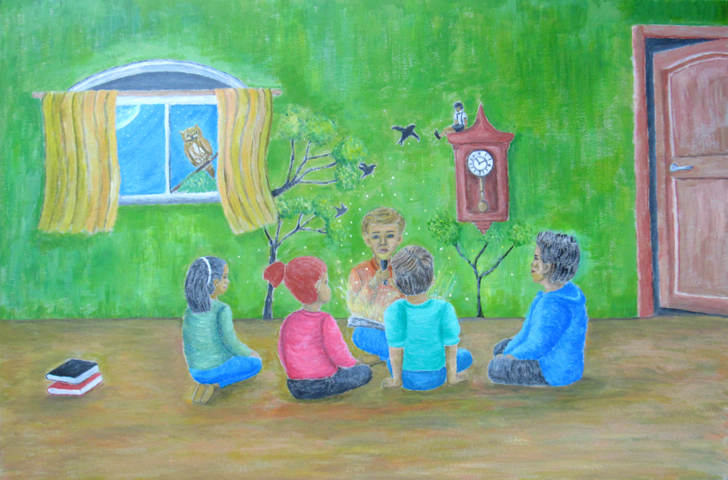
As a child growing up in the Philippines, I enjoyed listening to the adults in my family tell stories. I recall one afternoon when relatives came to visit. My cousins were outside playing while I was sprawled on the floor of the living room drawing pictures on sheets of paper that Dad brought home from work. He and Mom sat with my aunts and uncles around the table to enjoy a light merienda of rice cakes and fruit juice. I remember trying hard to stay still and quiet while listening in awe to stories about their lives in the rural provinces. Having been raised in urban Manila, I was transfixed by new images conjured from the imagination of a young mind. At the same time, I was transported to a new place.

Listening to a live storyteller is like opening a human book. Not only do you get the words, but you also get the actual emotions from their voices and facial expressions. The Human Library Organization is a global movement that uses the power of personal storytelling to foster dialogue about social issues. Founded in 2000 and headquartered in Copenhagen, Denmark, the organization secures spaces in libraries, educational institutions and conferences for people to engage in transformative storytelling.

Barkada’s goal for storytelling is three-fold: to spark conversation, to change people’s perceptions, and to influence their behavior. We have to transport them to a different place where they gain a new consciousness and a new way of seeing–a new human perspective.

Listening to those who can affect change is the first step to engaging them. It opens the door for them to be heard which in turn opens a window for them to listen.

Story begets story. It’s an emergent form of communication that naturally sparks conversation. The more stories are shared, the more learning happens to change people’s worldview.

Learning forges relationships. In time, a level of trust is formed between the people who now share a common perspective. When we build community around a shared narrative, we are able to find meaning in our actions for creating change.

Begin with the willingness to listen first. It sets you on a course to rediscover your young mind, set it free, and let your imagination transport you to a new place. Then invite others to share your vision and work with you to realize this place for all who need it.
America, Americana, and the price we pay to be free

In Chicago’s Rogers Park neighborhood, we’ve got cool summer weather perfect for enjoying the outdoors and some great grilling. The 4th of July was a time to celebrate our victories as a nation, to celebrate our freedom, and to express our patriotism. But what does this all mean? What is freedom in today’s context?

What does it mean to be an American, to value our liberties and recognize that others share that same freedom with us? I invite you to listen to stories that reveal the truth about the men and women who fight for our country’s freedom – not romanticized, not idealized. It’s what most of us don’t see, don’t know about, or sometimes, even choose to ignore.

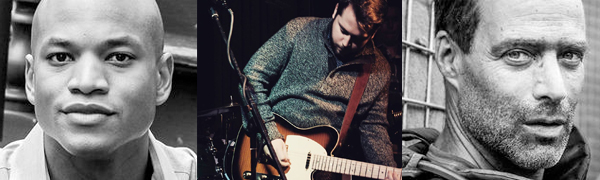
I would also like to introduce you to Rolfe Neigenfind who describes his music as embodying the spirit of Americana with roots in the Blues. A native of North Carolina, Rolfe made his home in Rogers Park once. He now lives in Nashville. I’ll be playing songs from his latest album Chicago available on iTunes.

Listen. Reflect. Celebrate

Wes Moore, Rolfe Neigenfind, Sebastian Junger

Land of Opportunity

Many people seem to have forgotten that America was built by immigrants and refugees. Throughout history, they’ve contributed to the fabric of this nation. But today, in the media and in public debate, refugees are routinely portrayed as a burden and, on many occasions, as a threat.

Listen to three thought-leaders share their stories of struggle and hope, and a belief in a moral compass that is still alive in the hearts of all Americans.

ted_immigration2
Alexander Betts, Sayu Bhojwani, Tan Le

How about a New Year’s resolution to preserve our humanity?

I’ve realized that we gain wisdom and compassion when we let people tell their own stories. I invite you to pause in the next few days remaining in 2016 and listen to a moving, heartfelt and at times funny talk by someone who has walked the path. I hope it will give you as much new insight and inspiration as it had given me, or even more.

Brené Brown: Human Connection
“…Religion has gone from ‘I believe in faith and mystery’ to certainty–‘I’m right. You’re wrong. Shut up.’ This is what politics is today. There’s no conversation. There’s just blame. We try to perfect, most dangerously, our children. They’re hardwired for struggle when they get here. Our job is not to make them perfect. Our job is to tell them that they’re worthy of love and belonging…”
[ted id=1042]

Andrew Solomon: Identity and Meaning
“…We don’t seek the painful experiences that hew our identities, but we seek our identities in the wake of painful experiences. We cannot bear a pointless torment, but we can endure great pain if we believe that it’s purposeful…”
[ted id=2005]

Bryan Stevenson: Justice
“…We love innovation. We love technology. We love creativity…There is no disconnect around technology and design that will allow us to be fully human until we pay attention to suffering, to poverty, to exclusion, to unfairness, to injustice…Ultimately, our humanity depends on everyone’s humanity…”
[ted id=1378]

Breaking the Silence

On Saturday, October 15, I volunteered to help raise awareness for suicide prevention. People gathered in the mist at 6:00 a.m. to set up for the Out of the Darkness Chicagoland Community Walk by Grant Park in Chicago. As daylight came, so did the people wearing colorful t-shirts to remember loved ones they lost to suicide. There were 4,300 registered walkers and the event raised more than $700,000 for vital research and programs.

14724649_10209769460726770_7591463005807733283_n14642275_10209768604425363_6325606136062840610_n

Suicide is a serious public health problem that takes an enormous toll on families, friends, classmates, co-workers, and communities, as well as on our military personnel and veterans.  According to the Centers for Disease Control and Prevention, in 2014–the most recent year for which full data is available–someone in the United States died by suicide every 12.9 minutes. This makes it the 10th leading cause of death for Americans, but unlike many other leading causes, suicide continues to claim more lives each year.

To know the reason for someone’s suicide death is challenging. Research has shown that most people who die by suicide have a potentially treatable mental disorder at the time of their death. The disorder has often gone unrecognized and untreated. What we know about the causes of suicide is lagging behind that of other life-threatening illnesses because the stigma surrounding suicide has limited society’s investment in vital research.

Having heard the stories of volunteers made me realize that even when our lives appear fine from the outside, locked within can be a world of quiet suffering, leading some to the decision to end their life. During his TEDTalk in March 2011, JD Schramm asks us to break the silence surrounding suicide and suicide attempts, and to create much-needed resources to help people trying to fully reclaim their lives after escaping death.

Since its founding in 1987, the American Foundation for Suicide Prevention has connected tens of thousands of people who have lost a family member, loved one or friend to suicide and help them cope. AFSP has reached thousands of individuals who are at risk for suicide, as well as those who love and care for them to make prevention possible. In order to help people understand the facts, AFSP has gained the participation of members of the scientific and clinical communities, who conduct groundbreaking research on suicide and its prevention. To fully achieve its mission, AFSP engages individuals and families, scientists and legislators, and community organizations in essential dialogue to increase awareness, understanding and support for those impacted by suicide.

It is a journey in which everyone must participate because the stories surrounding suicide reflects what’s happening in our homes, our schools and our communities. The more we openly talk about it and listen, the better we can see and act.

To find out more, visit the American Foundation for Suicide Prevention at afsp.org.